Forest management plan consultancy
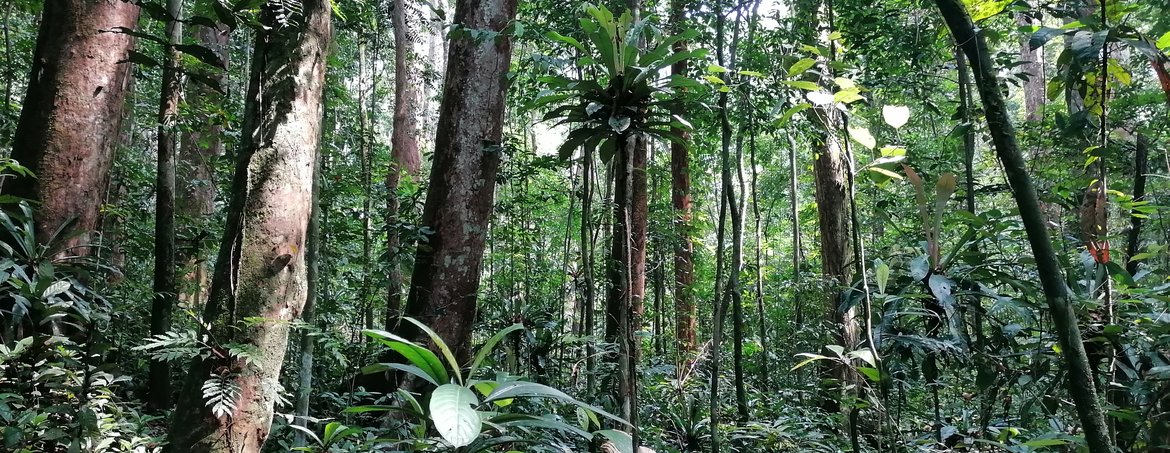
A well-designed forest management plan is the foundation of any sustainable, productive, and legally compliant forestry operation. EticWood provides customised consultancy from initial assessment through to final plan delivery, certification support, and ongoing monitoring. We work with your objectives, your constraints, and your land. Our approach is consultative, not prescriptive.
EticWood covers the full scope of forest management plan development. Our consultancy services are tailored to each property and client context. Every plan we develop is custom-built. There are no generic templates. We design management strategies around your land, your goals, and your regulatory environment.
Detailed field assessments of timber volumes, species composition, age classes, and forest health, combined with GIS mapping and remote sensing data.
Structured workshops to align your goals, including timber production, conservation, carbon revenue and recreation, with what your land can realistically deliver.
Species selection, thinning schedules, rotation planning, and responsible silvicultural practices adapted to your forest type and objectives.
Harvest scheduling, minimum felling diameters, extraction planning, and traceability procedures to meet legal and market standards.
High Conservation Value (HCV) zone identification, protected species surveys, habitat connectivity assessments, and conservation area designation.
Gap assessments, plan alignment, and liaison with FSC (Forest Stewardship Council) and PEFC (Programme for the Endorsement of Forest Certification) certification bodies.
Navigation of national forestry law, environmental regulations, EU Timber Regulation, and EUDR (EU Deforestation Regulation) requirements.
Eligibility assessment and application support for government forestry grants, EU rural development funds, and ecosystem service payment schemes.
Carbon stock assessment, sequestration potential evaluation, and integration of carbon revenue streams (ARR, REDD+ where applicable) into your management plan.
EticWood brings together a multidisciplinary team of certified foresters, ecologists, GIS specialists, carbon market experts, and regulatory compliance professionals. Our consultants hold recognised qualifications in forestry science, ecology, and environmental management, with practical experience in FSC and PEFC accreditation processes across multiple countries.
Our expertise spans sustainable silviculture, ecological restoration, timber economics, biodiversity assessment, and regulatory compliance. We have developed forest management plans for private concessions covering hundreds of thousands of hectares in Central Africa, supported the Gabon Ministry of Forests in designing structured management plan validation tools, and partnered with the Smithsonian Institute and WWF for scientific forest inventories and conservation research.
Engaging EticWood follows a structured, transparent process. Here is how a typical forest management plan engagement works:
A needs assessment conversation to understand your objectives, property context, budget, and timeline. No cost, no obligation.
On-site field assessment covering timber volumes, species composition, age classes, soil conditions, water features, and biodiversity indicators. GIS mapping and remote sensing data integrated.
Structured session with you and any relevant stakeholders to define clear, measurable management goals and prioritise trade-offs between timber production, conservation, and ecosystem services.
Silvicultural prescriptions, harvest schedules, conservation area designation, regulatory compliance framework, and grant opportunities documented in a comprehensive management plan.
The draft plan is shared with you for feedback. Adjustments are made until the plan accurately reflects your objectives and constraints.
The approved plan is finalised and submitted to the relevant authorities where required, with full compliance documentation.
Optional ongoing consultancy to support plan execution, harvest oversight, and stakeholder engagement throughout the active management period.
Periodic reviews to track performance against objectives, adapt to changing conditions, and maintain regulatory compliance over the plan's lifetime.
Forest management plans are legally complex, technically demanding, and strategically consequential. Here is what professional consultancy delivers that self-managed approaches rarely can:
The return on investment is concrete. Grants accessed often cover consultancy costs entirely. FSC or PEFC certification opens premium timber markets. Avoided regulatory penalties alone can justify the investment many times over.
Certifications and grants are among the most significant value drivers a professionally managed forest can access. FSC (Forest Stewardship Council) certification is the global benchmark for sustainable forest management, covering environmental, social, and economic criteria. Annual audits are conducted by independent bodies including Bureau Veritas, SGS, and Rainforest Alliance. PEFC (Programme for the Endorsement of Forest Certification) is the European equivalent, widely recognised by timber buyers and institutional investors.
EticWood's role in certification is end-to-end: we conduct gap assessments against the relevant standard, align the management plan to certification requirements, and liaise with certification bodies throughout the validation and audit process. Our objective is for clients to achieve certification on the first attempt.
On the grants side, available schemes vary significantly by country and region. National forestry authorities in many jurisdictions offer cost-share programmes for management plan development, reforestation, and biodiversity enhancement. EU rural development funds and LIFE programme grants are accessible for qualifying projects. For forests with carbon sequestration potential, ecosystem service payment mechanisms and voluntary carbon market revenue represent additional income streams. EticWood assesses eligibility, prepares applications, and manages reporting obligations for all relevant schemes.
A forest management plan is not a document. It is the operating framework for every decision your forest will require over the next 10 to 25 years. The quality of that framework determines whether your forest delivers its ecological, economic, and regulatory potential or falls short.
EticWood brings the combination of capabilities that most consultancies cannot match: bureau d'études rigour, international field experience across Africa and Latin America, certified professionals with FSC and PEFC accreditation, and direct access to carbon markets, grant networks, and regulatory bodies.
Clients who work with EticWood consistently cite three differentiators: the quality of the inventory data we generate, the practical workability of the silvicultural prescriptions we design, and the seamless integration of certification and grant support into the plan itself. Our management plan support for the FAO in Uganda is one example of how this translates across geographies and institutional contexts. These are not add-ons. They are built in from day one.






















Costs depend on property size, complexity, and scope. Small properties (10 to 50 hectares) typically range from €3,000 to €10,000 for a full plan including inventory, mapping, and regulatory submission. Medium-scale properties (50 to 500 hectares) range from €10,000 to €50,000. Large concessions (500 hectares and above) are priced on scope. The ROI case is straightforward: grants accessed via a professionally prepared application often cover consultancy costs in full, while FSC or PEFC certification unlocks timber price premiums that recoup the investment within a single harvest cycle. Contact us for a tailored quote.
Standard forest management plans cover 10 to 20 years, with formal reviews every five years to adapt to growth data, market changes, new regulations and evolving landowner objectives. Some jurisdictions require periodic plan updates as a condition of continued permit compliance. Adaptive management, ongoing monitoring with incremental adjustments, runs continuously throughout the plan period. EticWood offers periodic review services to keep plans current and compliant without starting from scratch.
Yes. EticWood serves all scales, from family woodlands of five hectares to commercial concessions covering hundreds of thousands of hectares. Smaller properties receive streamlined, cost-effective plans focused on priority objectives, often with access to group certification schemes that significantly reduce certification costs through shared audits. Larger estates and commercial forests receive comprehensive planning supported by advanced GIS, remote sensing, and complex stakeholder engagement processes.
A one-off engagement covers plan development, finalisation, and regulatory submission. You then implement the plan independently. Ongoing support extends the relationship: periodic monitoring, annual operating plan reviews, harvest oversight, grant application assistance, compliance updates, and plan adjustments as conditions change. Many clients begin with a one-off plan and add ongoing support as they recognise the value of continued expert guidance. Arrangements are flexible and can be structured to match your budget and operational needs.
EticWood works across all forest types. Native woodlands receive conservation centred plans with close to nature silviculture, biodiversity enhancement, and HCV zone protection. Commercial plantations are managed for optimised timber production, rotation planning, and certification readiness. Mixed forests balance production and conservation objectives within a single integrated framework. Agroforestry systems, trees integrated with agriculture or livestock, and urban forestry for amenity and safety are also within our scope. Biodiversity is integrated into every plan, regardless of forest type or primary objective.
Yes. Carbon integration is an increasingly important element of professionally managed forests. EticWood provides carbon stock assessment to establish a credible baseline, sequestration potential evaluation, and full carbon project development support for ARR (Afforestation, Reforestation, Revegetation) and REDD+ where applicable. Management plans can incorporate enhanced carbon storage practices, biodiversity co-benefit protocols, and monitoring frameworks compatible with Verra and Gold Standard verification requirements. Revenue stacking across timber, carbon, and grants is one of the strongest arguments for professional consultancy over self-managed approaches.
Applicable regulations vary by jurisdiction but commonly include national forestry law governing harvest permits and protected species, environmental regulations covering water quality, soil protection, and biodiversity, local planning and land use designations, the EU Timber Regulation requiring legality assurance for timber sold in the EU, and the EUDR (EU Deforestation Regulation) requiring deforestation-free supply chain documentation. EticWood identifies every applicable regulatory requirement, ensures plan compliance, navigates approval processes with the relevant authorities, and maintains updates as regulations evolve. Compliance is not a risk to manage. It is a baseline we build from.
Yes. Plan updates are among the most common engagements we handle. Typical reasons include an expiring plan requiring renewal, changed landowner objectives, new regulatory requirements, a decision to pursue FSC or PEFC certification, a grant application with specific plan requirements, or performance gaps where targets have not been met. The update process involves reviewing the existing plan, assessing current forest condition against the original baseline, identifying gaps, and revising prescriptions accordingly. Updates are generally faster and more cost-effective than new plans because they build on existing inventory data and established management history.



Contact EticWood for a free initial consultation. No pitch, no obligation. Just a conversation about your forest and your objectives.